FAQ

Simple, honest answers before and after your appointment.

This page gathers Emily’s approved guidance for common skincare, facial, dermaplaning, preparation, and aftercare questions. Content is educational and general, not a medical diagnosis.

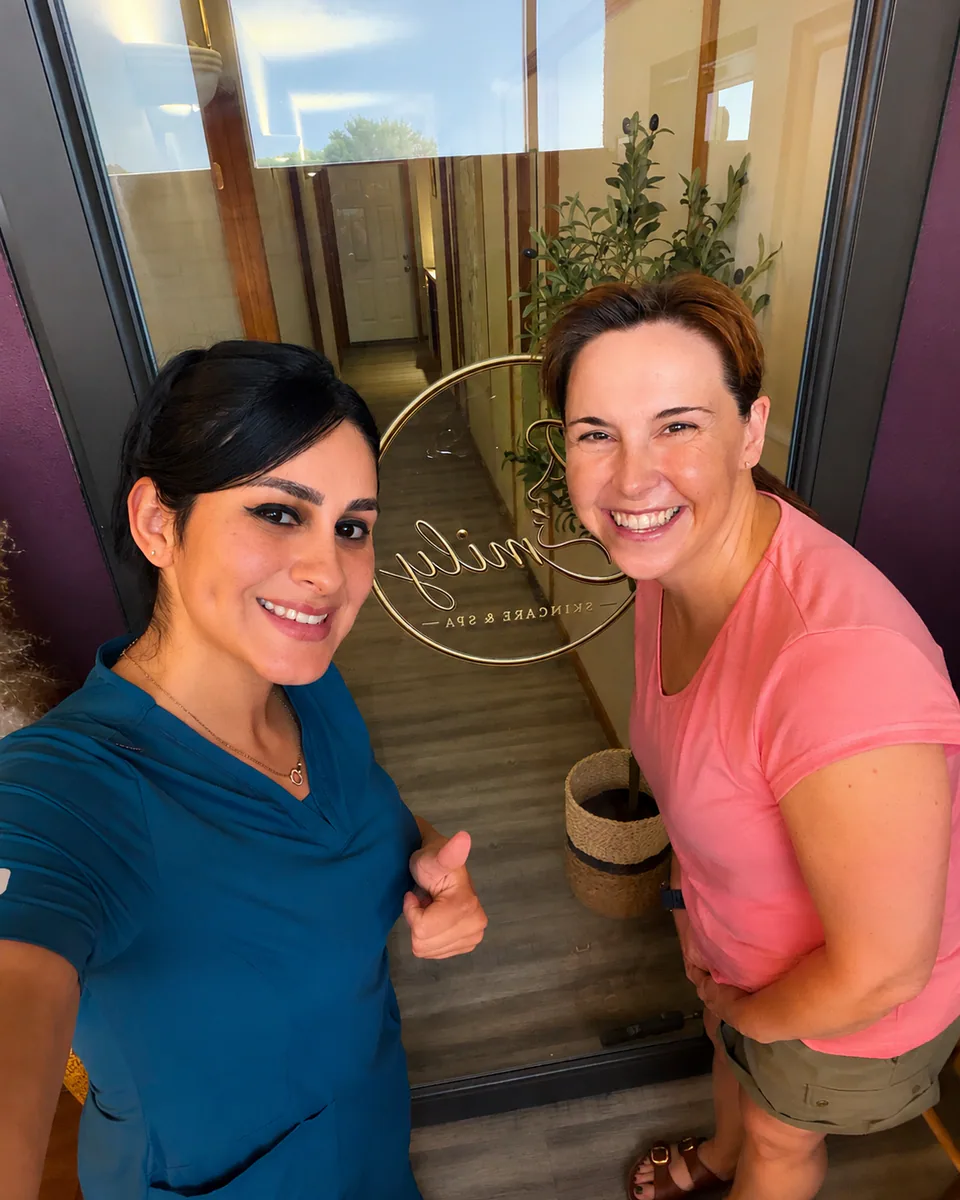
Emily providing a personalized skincare treatment in a calm private studio.

Before your appointment

Before your appointment

Preparation, makeup, pregnancy, appointment length, and choosing a facial when you are not sure about your skin type.

What should I do before my appointment?

  • Avoid exfoliating your skin.
  • Do not wax your face immediately before your appointment.
  • Let Emily know if you use retinol, acids, or dermatology medications.
  • Share any allergies, sensitivities, or skin conditions.
  • Let Emily know if you are pregnant or breastfeeding.
  • Arrive without heavy makeup when possible.

You do not need complicated preparation. Your skin will be cleansed and evaluated at the beginning.

Is it safe during pregnancy?

Some gentle, calming, hydrating facials may be adapted during pregnancy. However, not all ingredients and procedures are appropriate.

It is important to share that you are pregnant before the appointment so the protocol can be modified and products that are not recommended during this stage can be avoided. When there is any doubt, Emily may request authorization or a recommendation from the medical professional supervising the pregnancy.

Should I arrive without makeup?

It is preferred, but not required. Makeup will be removed before the treatment.

Which facial should I choose if I do not know my skin type?

You can reserve a personalized facial. Your skin will be evaluated before products and techniques are chosen.

How long does an appointment last?

The length depends on the service:

  • Express Facial: approximately 30 minutes.
  • Dermaplaning: approximately 45 to 60 minutes.
  • Personalized facial or deep cleansing facial: approximately 60 to 75 minutes.
  • Services with add-ons may require additional time.

For your first visit, arriving a few minutes early is recommended so consultation and forms can be completed.

During treatment

During treatment

What you may feel during service, when a treatment should be adjusted, and how sensitive skin, men, acne, and extractions are considered.

Does the treatment hurt?

Most facials are comfortable and relaxing.

During extractions, you may feel pressure or mild discomfort in congested areas. Dermaplaning and microdermabrasion should not cause intense pain, although some people may feel sensitivity.

The treatment should always be adjusted to the tolerance and condition of the skin.

Will I have marks after extractions?

Temporary redness may appear. Extractions should be done carefully and only when the pore is prepared.

Do you see men?

Yes. Men can also benefit from treatments for cleansing, hydration, texture, pores, blackheads, and after-shaving care.

Each facial is adapted to skin type, facial hair, sensitivity, and personal goals.

What treatment do you recommend for sensitive skin?

For sensitive skin, a calming and hydrating facial is generally recommended.

The treatment should avoid strong exfoliation, excessive heat, intense fragrance, and too many active ingredients at the same time. First, Emily evaluates whether there is dryness, redness, irritation, or a disrupted skin barrier.

If there is severe inflammation, persistent burning, or an active condition, it may be necessary to consult a dermatologist first.

Can I have dermaplaning if I have acne?

It is not recommended to pass the tool over inflamed acne or open lesions. The skin should be evaluated first.

After your appointment

After your appointment

Aftercare, makeup, sunscreen, products to pause temporarily, and realistic expectations for results.

Can I wear makeup after the treatment?

It depends on the treatment performed and how your skin reacts. After a gentle hydrating facial, you can generally wear makeup if there is no irritation.

After extractions, dermaplaning, microdermabrasion, or more intensive exfoliation, Emily recommends waiting approximately 24 hours. During that time, keep the skin clean, hydrated, and protected with sunscreen.

What should I do after my appointment?

  • Use a gentle cleanser.
  • Apply moisturizer.
  • Use sunscreen daily.
  • Avoid exfoliants, acids, and retinol for the recommended time.
  • Do not squeeze blemishes or touch your skin constantly.
  • Avoid excessive heat and direct sun exposure.

Each client receives recommendations according to the treatment performed.

What should I avoid after treatment?

After a facial, it is recommended to temporarily avoid:

  • Direct sun exposure.
  • Intense exercise, sauna, or steam.
  • Physical exfoliants.
  • Retinol and acids.
  • Facial waxing.
  • Picking blemishes or treated areas.
  • New, strong, or heavily fragranced products.

You should also use sunscreen and follow the specific aftercare instructions.

When will I start to see results?

In some cases, results can be noticed immediately: the skin may feel cleaner, softer, more hydrated, and more luminous when the treatment is finished.

In other cases, several sessions may be needed to appreciate deeper changes. This depends on the starting condition of the skin, the treatment goal, consistency, and the care done at home.

Do results last forever?

No. The skin continues renewing itself and is exposed daily to the environment, products, and habits. Results are maintained better with home care and regular treatments.

Treatments and results

Treatments and results

Dermaplaning, facials, acne, dark spots, sunscreen, pores, and realistic expectations.

How is dermaplaning different from shaving?

Household shaving is designed mainly to cut hair.

Dermaplaning is a professional treatment that uses a sterile tool to carefully remove fine facial hair and dead cells accumulated on the surface of the skin. This helps the face feel smoother and look more luminous.

Dermaplaning does not make hair grow back thicker or darker.

Does dermaplaning make more hair grow?

No. The treatment does not modify the follicle or make hair grow thicker.

How often should I get a facial?

For general maintenance, many people can have a facial every four to six weeks.

Frequency can change depending on skin type, sensitivity, acne, dehydration, dark spots, and goals. During the consultation, Emily recommends a plan adapted to each client’s needs.

What treatment helps with acne?

It depends on the type and severity of acne.

For blackheads, congested pores, and mild breakouts, a personalized deep cleansing facial may help remove superficial buildup, perform careful extractions, and improve the home routine.

Severe, painful, cystic, or inflammatory acne should be evaluated by a dermatologist. Facials can complement care, but they do not replace medical treatment.

Will a facial eliminate all my acne?

Not always. Acne requires consistency and, in some cases, dermatology care.

What treatment helps with dark spots?

First, the possible cause of the spots should be identified, such as post-acne marks, sun exposure, irritation, or melasma.

Depending on the skin, brightening facials, controlled exfoliation, and specific products may be recommended. Daily sun protection is essential to help prevent spots from darkening.

Spots that change in shape, size, or color should be evaluated by a medical professional.

What sunscreen do you recommend?

Emily recommends a broad-spectrum sunscreen with SPF 30 or higher.

For oily or acne-prone skin, look for lightweight, non-comedogenic formulas. For dry skin, choose a hydrating formula. For sensitive skin, a mineral and fragrance-free option may be helpful.

The best sunscreen is the one you can use consistently and reapply when there is prolonged sun exposure.

Do pores open and close?

Pores do not work like doors. Heat can soften superficial buildup and make extractions easier, but it does not physically open or close pores.

Can I get a facial before an event?

Yes, but the right treatment should be chosen. For an important event, it is recommended to avoid new or intense procedures the day before.

Do I need to use many products?

No. A basic and consistent routine can include cleansing, hydration, and sunscreen.

Personal guidance

Still deciding what to book?

A personalized facial lets Emily evaluate your skin before choosing products and techniques.

This educational content provides general skincare information and does not replace personalized medical advice, diagnosis, or treatment. Consult an appropriate healthcare professional for medical concerns.